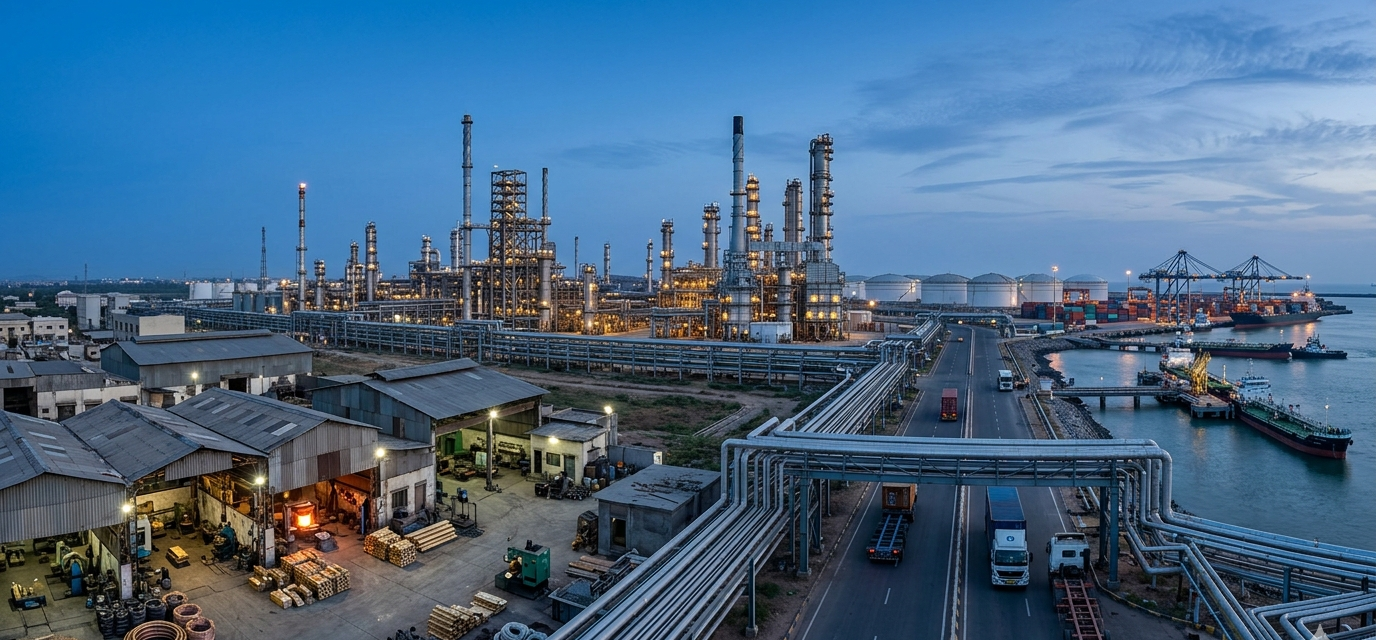
Jamnagar Explained: History, Heritage, and Economy
Jamnagar is one of Gujarat’s most remarkable cities, known for its royal history, maritime roots, cultural heritage, and powerful industrial economy. From its founding under Jam Rawal and the Jadeja dynasty to its role in modern India’s oil refining and brass manufacturing sectors, Jamnagar tells the story of a city that has evolved across centuries.
Jamnagar: A City of Royal Legacy, Industry, and Identity ✨
Jamnagar is one of Gujarat’s most remarkable cities, known for its royal past, strong cultural identity, and major industrial importance. Located in the Saurashtra region of western India, it was founded in 1540 A.D. as the capital of the Princely State of Nawanagar, which later became known as Jamnagar. Today, it stands as a city where history, commerce, heritage, and modern development all come together.
Where Jamnagar Is Located 📍
Jamnagar district is situated in the Saurashtra region of Gujarat and is surrounded by the Gulf of Kutch, Devbhumi Dwarka, Rajkot, and Porbandar districts. Its strategic coastal location helped shape its historical importance in trade, defense, and administration. The district covers both urban and rural landscapes, giving it a diverse identity that combines heritage towns, coastal areas, and industrial zones.
Jamnagar lies at latitude 21.41 N to 22.58 N and longitude 68.57 E to 70.39 E. This location has made it important for maritime connectivity, industrial logistics, and regional development. The city’s geography also supports salt production, coastal trade, and heavy industry.
How Jamnagar Got Its Name 🏰
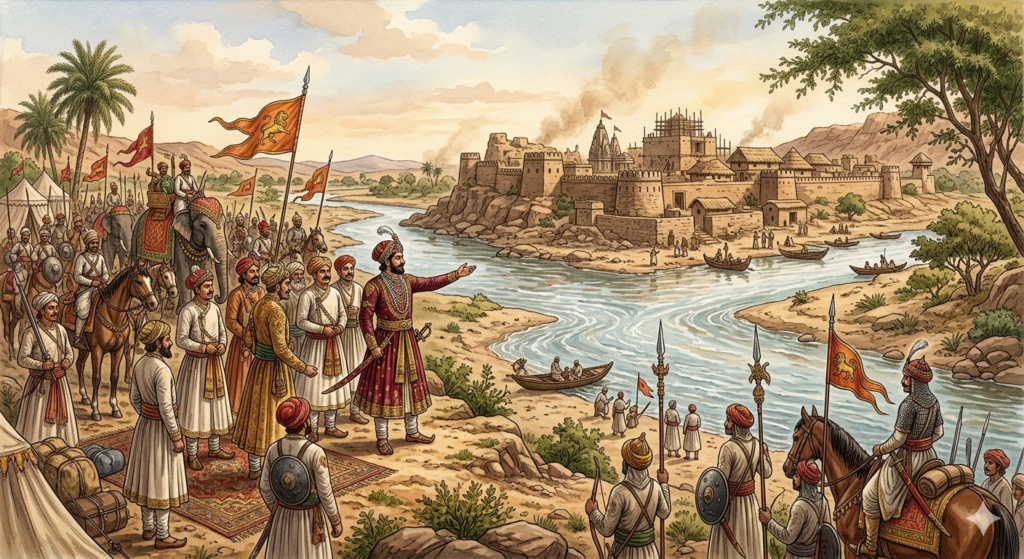
Jamnagar was originally known as Nawanagar, which means “new town”. According to the official district history, the city was founded by Jam Rawal in August 1540 on the banks of the Rangmati and Nagmati rivers. Later, Nawanagar came to be known as Jamnagar, meaning the town of the Jams.
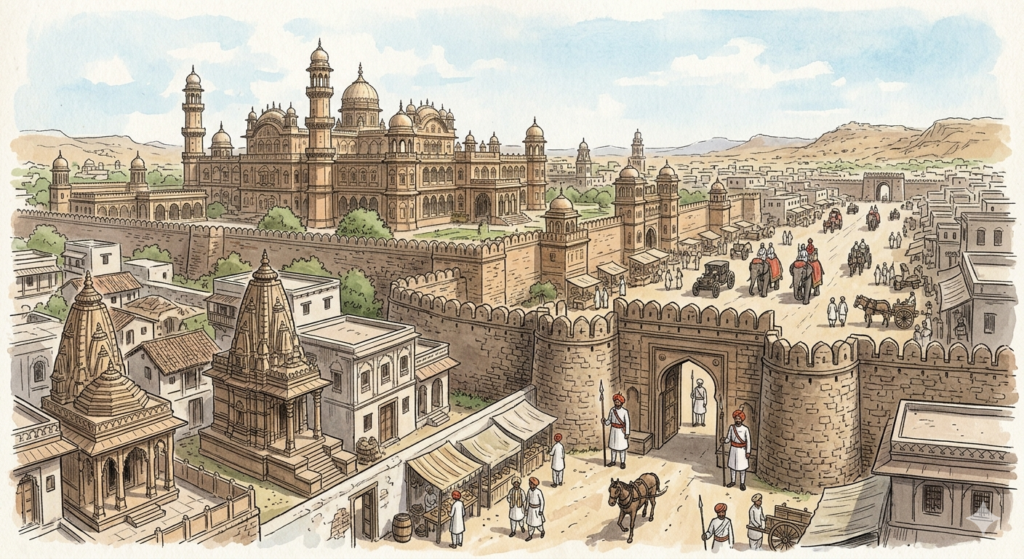
The name reflects the identity of the ruling Jadeja dynasty, who were called Jams. The title “Jam” became an important symbol of authority and lineage in the region. Even today, the historical name Nawanagar remains closely tied to the city’s royal memory.
Founding History and Early Rule ⚔️
The official district history says Jamnagar was founded in 1540 A.D. as the capital of the Princely State of Nawanagar. The city was established by Jam Rawal on the banks of the Rangmati and Nagmati rivers. It became the political center of the Jadeja rulers in the Saurashtra region.
The district history also connects the rulers of Nawanagar to the Yadava race through Pauranik literature, linking them to Lord Krishna and Dwarka traditions. This mix of recorded history and traditional lineage gives Jamnagar a deep cultural identity. From the beginning, the city was built not only as a capital but also as a symbol of power, heritage, and continuity.
The Kingdom Era Before the British 👑
Before the British period, Jamnagar existed as a princely state ruled by the Jadeja dynasty. The rulers governed Nawanagar as a semi-independent kingdom with its own courts, administration, and local power structure. Like many princely states in western India, it had to balance local authority, regional conflicts, and changing political pressures.
The kingdom era was marked by royal architecture, forts, temple traditions, and a strong social hierarchy. The city remained important because of its location and political influence in Saurashtra. Over time, Nawanagar became one of the significant princely states of the region.
Under British Rule
During British rule in India, Nawanagar remained a princely state rather than becoming a directly governed British province. That means the local ruler continued internal administration while the British controlled broader political and strategic matters. This type of arrangement was common across many princely states in India.
The colonial period brought gradual changes in governance, trade, and modernization. Though the royal structure remained, external influence increased over time. This phase prepared the region for the transition that would come after India’s independence.
After Independence and Integration
After independence, princely states were merged into the Indian Union. The Jamnagar district was formally formed in 1949 from the former territories of Navanagar, Dhrol, Dhrafa, Thana, and other regions. This was a major political shift because it ended the old princely system and brought the region under democratic administration.
This transition changed everything. Royal power gave way to district governance, modern civic systems, and state-led development. In the years that followed, Jamnagar began expanding as both an urban center and an industrial region.
What Changed After Freedom ✨
Freedom from British rule brought structural change, not just political change. The city shifted from a princely capital to part of a modern democratic state. Administration, law, education, and infrastructure slowly became more standardized under independent India.
Economically, Jamnagar began to diversify into industries that would later define its global reputation. Brass manufacturing, refinery operations, and related industrial ecosystems became major drivers of growth. This made Jamnagar one of the most important industrial cities in Gujarat.
Jamnagar’s Economy Today 💼
Jamnagar is now a major economic center in Gujarat and India, known especially for energy and manufacturing. The Reliance Jamnagar refinery complex is one of the biggest industrial assets in the city, and it is widely recognized as a world-scale refining site. The Jamnagar refinery began operations in 1999 and has since become a cornerstone of India’s refining strength.
The Vadinar refinery, operated by Nayara Energy, is another major industrial asset in the wider Jamnagar region. Nayara states that its Vadinar refinery started commercial production in May 2008 and is India’s second-largest single-site refinery with a capacity of 20 MMTPA. Together, these facilities give the region strategic importance in fuel supply, logistics, and energy security.
Brass Industry and Manufacturing 🏭
Jamnagar is also one of India’s best-known brass manufacturing hubs. Industry references describe it as a major brass cluster with a dense network of small and medium enterprises. This sector supports machining, casting, electroplating, fittings, valves, and export-oriented production.
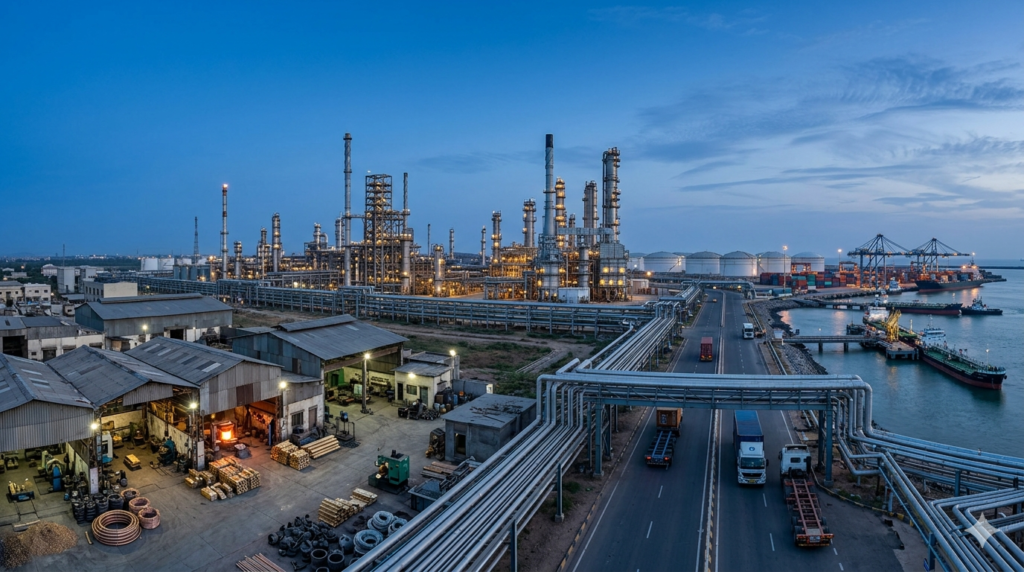
The strength of the brass industry lies in its ecosystem. Thousands of local units contribute to supply chains that serve domestic markets as well as exports. Because of this, Jamnagar has long been associated with skilled manufacturing and entrepreneurial activity.
Lifestyle and People 🌸
The lifestyle in Jamnagar reflects a blend of tradition and industrial town life. Gujarati culture remains dominant, and local customs are deeply rooted in food, festivals, family values, and community identity. The city is known for its welcoming nature and strong local social fabric.
People in Jamnagar live in a city that feels both historical and modern. On one side are royal buildings, temples, lakes, and old markets; on the other are factories, refineries, and business activity. That balance gives Jamnagar a unique daily rhythm.
Cultural Importance 🌼
Jamnagar’s cultural identity is shaped by temples, heritage structures, and Gujarati traditions. The district website highlights places of interest that reflect both religious and historical value. Lakhota Lake, Lakhota Fort, Bala Hanuman Temple, and other heritage spots continue to attract visitors.
The city also has strong value in local storytelling and identity. Its royal past, its link with Nawanagar, and its association with the Jadeja line still matter in how people understand the city. That cultural continuity is one reason Jamnagar remains memorable far beyond Gujarat.
Jamnagar’s Role in Gujarat and India
Jamnagar matters to Gujarat because it contributes both heritage and economic output. It is a place where a historic princely state evolved into a modern industrial zone. This makes it important for tourism, manufacturing, and regional identity.
At the national level, the city contributes to fuel refining, petrochemical activity, and manufacturing supply chains. Its industrial base supports jobs, exports, and energy infrastructure. In short, Jamnagar is not only a historical city; it is a working engine of economic activity.
Jamnagar Today 🚀
Today, Jamnagar stands as one of Gujarat’s most interesting cities because it combines history, industry, and culture in one place. It is a city with royal roots, colonial transitions, and modern industrial strength. That mix makes it ideal for a website like Jamnagar.net, where you can build a strong authority brand around the city.
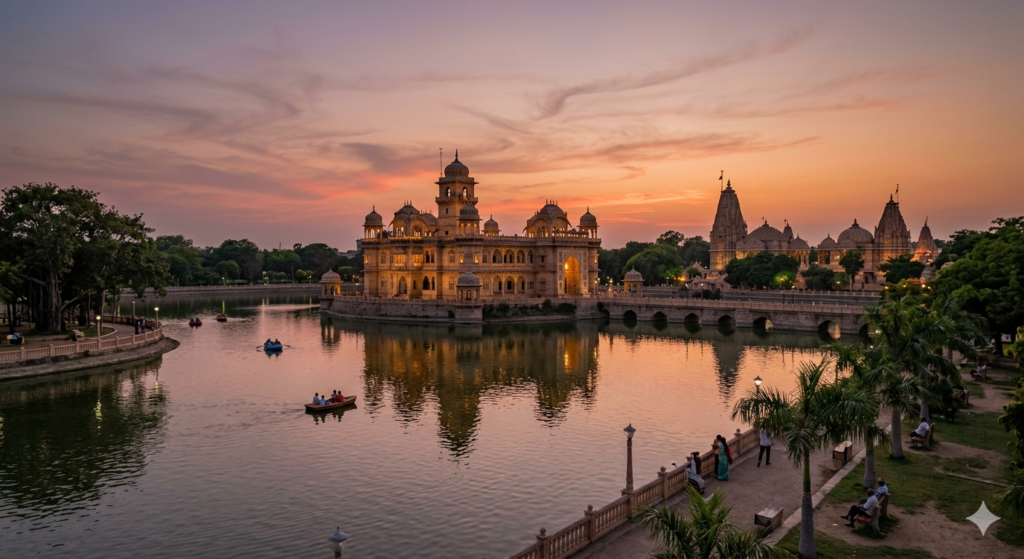
The city continues to grow in relevance through refining, brass, tourism, and urban development. At the same time, its heritage remains deeply visible in its architecture, traditions, and local pride. Jamnagar’s story is therefore not just about the past; it is about how a city keeps reinventing itself.
Conclusion 🌟
Jamnagar’s journey began in 1540 when Jam Rawal founded Nawanagar as a princely capital on the banks of the Rangmati and Nagmati rivers. It passed through the kingdom era, the British period, and the post-independence transition into a modern district. Today, it plays a major role in Gujarat’s industrial economy through refining and brass manufacturing.
