Brass Cable Glands & Electrical Parts: Specs Buyers Should Confirm
How to enquire for brass cable glands and electrical components — thread, size range, finish and packing — from a Jamnagar supply desk.
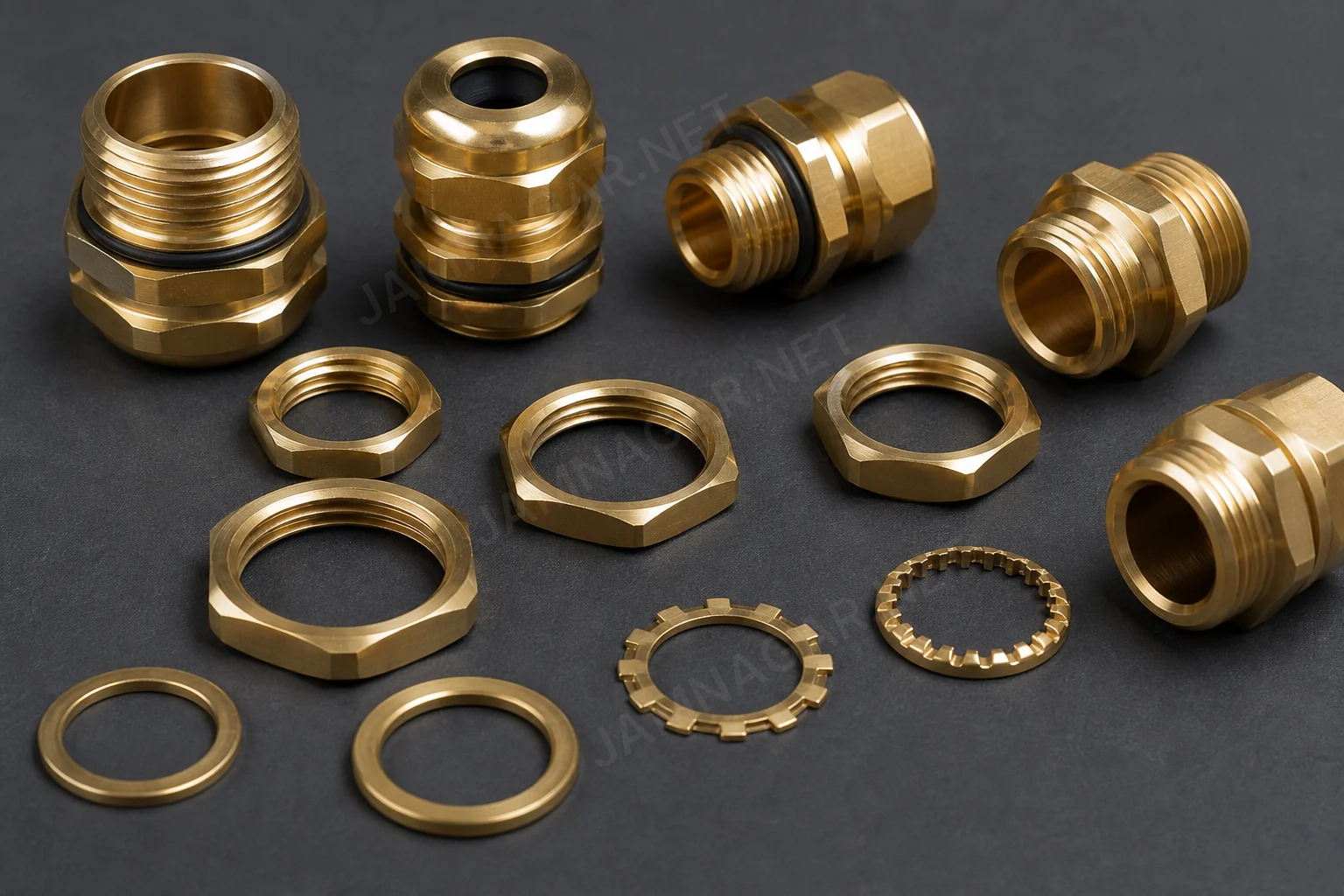
Cable glands and electrical brass parts look simple in a photo. On the panel or machine, thread engagement, clamping behaviour and finish decide whether the lot is usable. This page is written for buyers who need a practical path to quote as a brass cable glands manufacturer supply desk would expect — sizes, threads and finishes stated clearly, without vague “all sizes available” language.
Jamnagar.net lists gland-related and electrical families in the catalogue. Custom bodies, adaptors and terminals still need a drawing or a clear size chart. The goal of this article is to help you send that chart once, correctly.
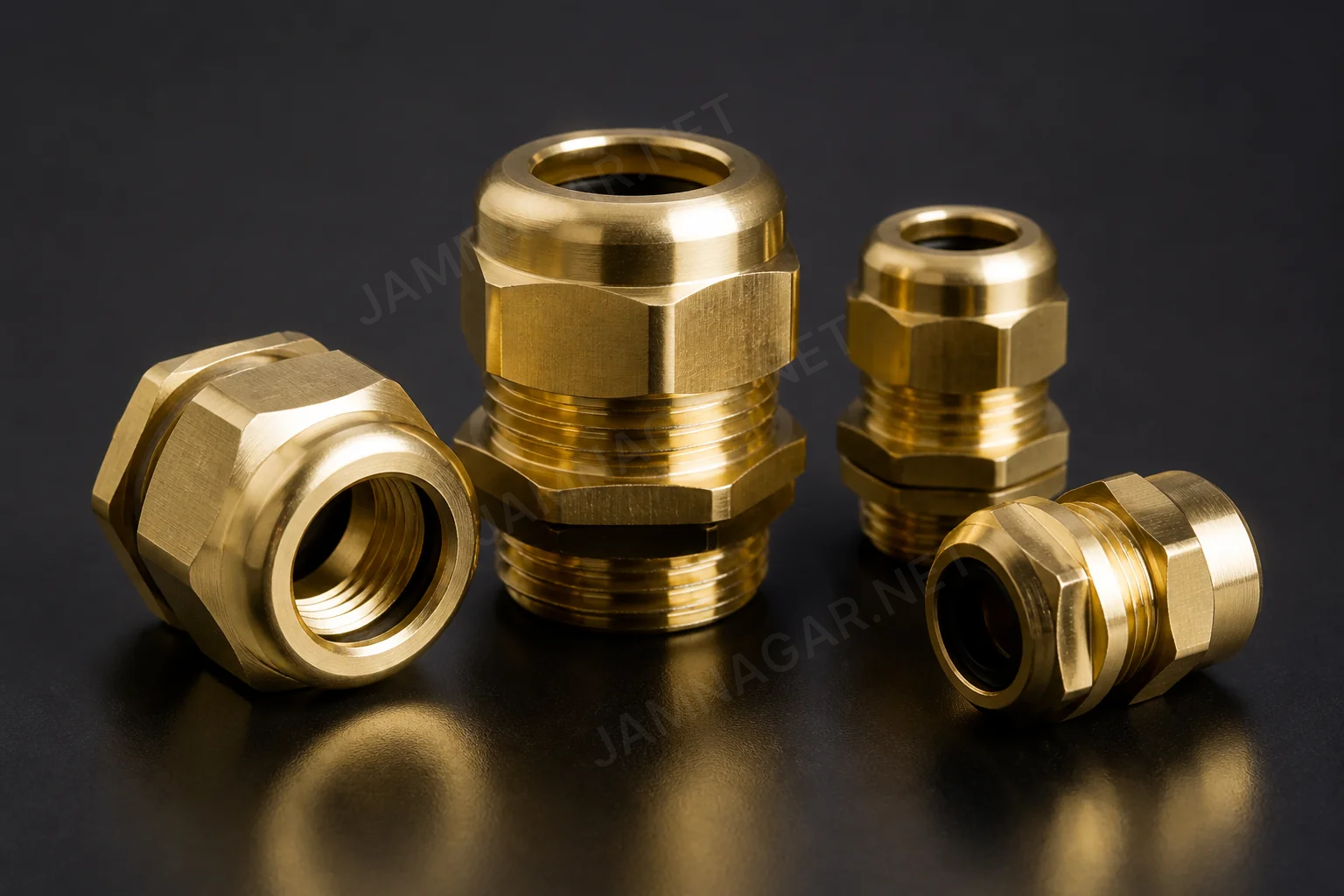
What buyers usually mean by “brass cable gland”
Commercial enquiries often cover more than a single finished retail gland. Typical asks include machined bodies, entry threads matched to panel standards, lock nuts and washers, and sometimes a parallel list of terminals or earthing hardware for the same electrical programme.
- Gland bodies and related machined brass parts
- Entry threads matched to panel or enclosure standards
- Lock nuts, washers and accessory brass pieces
- Electrical terminals, pins and earthing hardware in the same programme
- Reducers / adaptors when the panel thread and cable entry differ
Open cable glands for the gland family and electrical for terminals and related brass. If your BOM mixes both, one quotation with a line list is fine — and usually faster than two incomplete emails.
Spec fields that decide a usable gland quote
| Field | Examples / notes | Buyer action |
|---|---|---|
| Entry thread | Metric, PG, NPT, BSP — as required | Name standard + size |
| Cable range | Min–max cable OD if relevant | Share chart or sample |
| Body style | Short / long / custom geometry | Drawing or catalogue SKU |
| Finish | Natural brass, nickel, other | Write finish clearly |
| Accessories | Lock nut, earth tag, washer | List yes/no per line |
| Quantity | Per size, not only grand total | Break down by SKU |
Shop-floor note: “PG / metric mix, nickel, with lock nuts” is a workable start. “Glands — all sizes — best price” is not. Size mix drives tooling, packing and rate.
Electrical brass parts that travel with gland programmes
Many electrical OEMs and panel builders buy glands alongside terminals, pins, connectors and earthing parts. Those pieces share the same need for clean threads, consistent plating and sorted packing. When you quotation a mixed electrical pack:
- Separate lines for gland SKUs vs terminal SKUs
- State plating on each line if it differs
- Attach drawings for non-catalogue pins or custom earth studs
- Note if parts ship as kits or as loose bulk
- Flag any part that must match an existing bin label code
Browse the electrical category in parallel with cable glands so you do not force every part into the wrong family name. Wrong family naming slows the quote more than a missing brochure sentence.
Thread and panel fit — get this wrong and nothing else matters
Gland threads must match the enclosure or adaptor. Confirm the standard and size printed the same way on PO and drawing. Confirm male/female orientation and any reducer need. Confirm hex size for tool clearance if the panel cut-out is tight. Confirm the seal/washer stack if your design depends on it.
If you are copying a running import part, a sample plus critical measurements beats a vague “same as before” email when the previous supplier is gone. Measure the entry thread and the clamping-related diameters; do not assume the hex alone identifies the SKU.
Size ranges and mixed orders
Electrical distributors often need a ladder of sizes in one shipment. OEM builders often need fewer sizes at higher repeatability. Both are valid. What fails is a single lump quantity with no size break. Always give quantity per thread size. If you want a starter assortment, say which sizes are primary and which are optional — optional lines can be quoted separately without blocking the main SKU.
Finish and corrosion language (commercial, not lab talk)
Natural brass and nickel are the two call-outs we see most on gland and electrical hardware. Tin or other finishes appear when the electrical duty asks for them. Write the finish per line. If outdoor or coastal duty matters to your customer, say so — do not assume plating from a photo, and do not ask us to invent an IP or hazardous-area claim that is not on your specification.
Packing for electrical buyers
Small gland accessories and terminals are easy to mix in transit. Ask for poly bags by size and part number, labels with your code if bins are already mapped, separate bags for lock nuts and bodies when kits are not required, and export carton notes when shipping overseas. Kit packing is available when you define the kit contents; undefined “kit like last year” is not a specification.
quotation checklist for cable glands & electrical brass
| Checklist item | Done? |
|---|---|
| Category link or drawing attached | ☐ |
| Thread standard + size per line | ☐ |
| Finish per line | ☐ |
| Accessories listed | ☐ |
| Quantity by SKU | ☐ |
| Delivery city / port | ☐ |
| Sample reference photo (if no CAD) | ☐ |
How quoting works on Jamnagar.net
Send the size list or drawing through the quotation form. We reply against the specification you provide — thread, finish, quantity and packing. We do not invent IP ratings, explosion-proof claims or awards in the quote. If your project needs a formal compliance path, that requirement must come from your drawing or customer standard, and you should state what documents you need before bulk production begins.
For related turned or fastener pieces on the same panel job, you can still keep one quotation — just keep gland lines and electrical lines numbered. Clarity beats elegance.
FAQ
Do you manufacture every cable gland size as a ready stock item?
Availability depends on the SKU and quantity. Catalogue lines and drawing-based parts are both enquired through a quotation request with a clear size list.
Can I order glands and electrical terminals together?
Yes. Put them on one quotation with separate lines so packing and finish stay clear.
What thread systems do buyers usually specify?
Metric, PG, NPT and BSP-style call-outs are common. Always write the standard you need — do not assume from a photo.
Is nickel plating standard on all gland parts?
No. Natural brass and nickel are both common. State the finish on each line.
Can you match a sample gland from another supply source?
Share the sample dimensions, thread and finish notes. A drawing remains better for tight fits.
Where do I start if I only know the panel thread?
Open cable glands, shortlist close sizes, then quotation with panel thread + cable range + quantity.
Related reading
Related reading on Jamnagar.net: industrial applications map · thread and finish quality.
Next step
Shortlist the gland or electrical family, write thread and finish per size, and send the quotation request. Clear lines produce clear rates — and fewer panel-fit surprises when the cartons open.


