Brass Component Cost Breakdown: Material, Machining and Finishing
Understand what drives brass component prices: material, scrap recovery, machining, setup, finishing, inspection and packing, with a clearly hypothetical setup example.
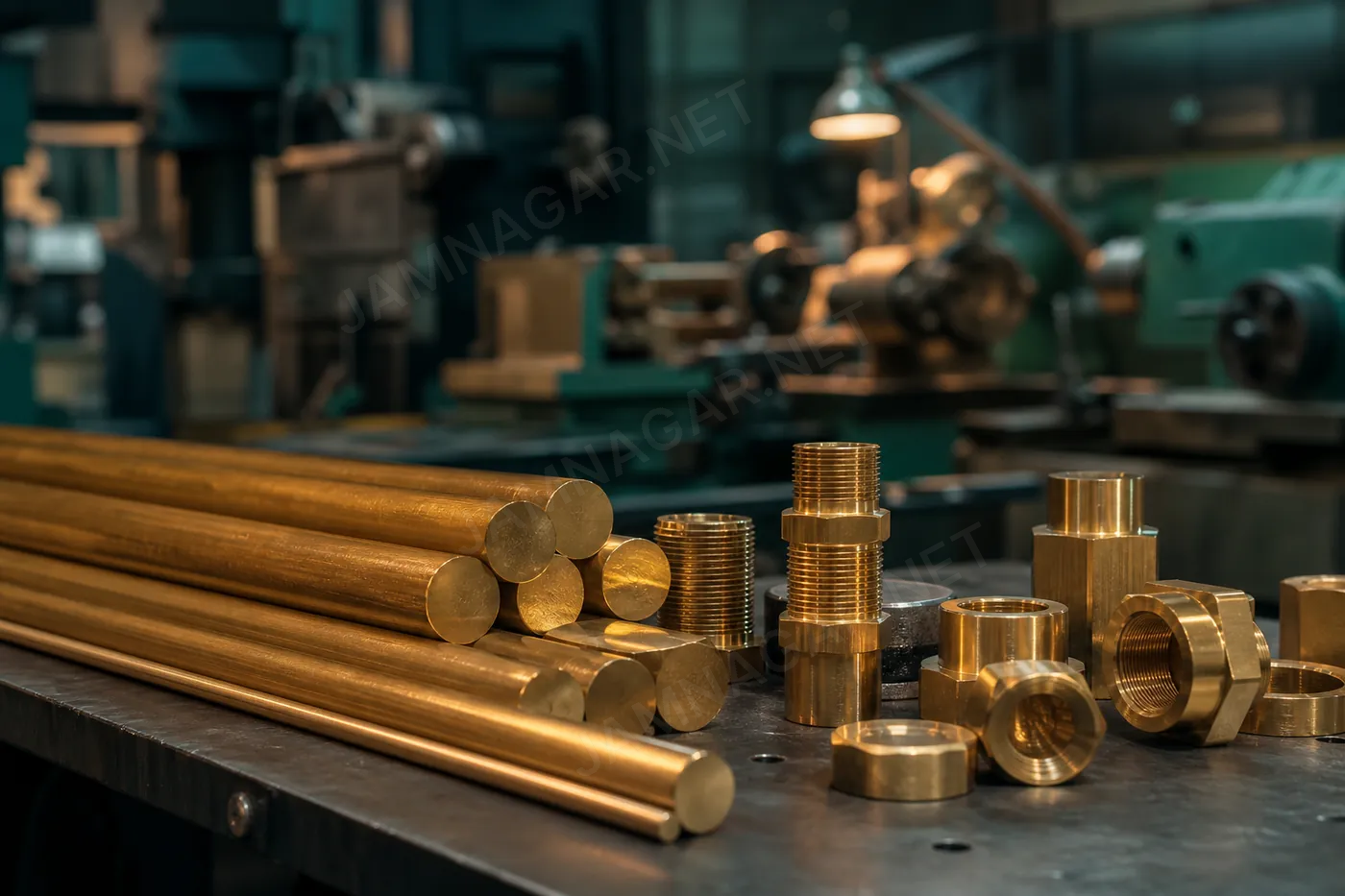
Brass component cost depends on more than the weight of the finished part. A quotation may include material, machining, setup, tooling, finishing, inspection and packing. Two similar-looking fittings can therefore have different prices even when both are made from brass.
For buyers sourcing from Jamnagar, the useful question is: which requirements are included in this price, and which assumptions could change it? This guide explains the main cost drivers and how to compare quotations against the same specification.
What goes into a brass component quotation?
| Cost driver | What can change it | What the buyer should specify |
|---|---|---|
| Material | Alloy, stock form, blank size and material purchasing basis | Accepted grade, material specification and required condition |
| Material removal and recovery | Amount machined away, recoverable scrap and recovery assumptions | Finished drawing and any agreed material or scrap accounting basis |
| Setup and tooling | New programs, fixtures, dies, gauges and changeovers | Trial quantity, repeat demand and separate tooling scope |
| Machining | Cycle time, number of operations, tool access and handling | Geometry, threads, critical dimensions and surface requirements |
| Finishing | Deburring, cleaning, polishing, plating or coating | Named finish and final-condition acceptance requirements |
| Inspection | Characteristics checked, sampling, tests and required records | Acceptance criteria, inspection plan and reports |
| Packing and delivery | Protection, labels, kit assembly, shipment size and destination | Inner-pack rules, quantities, destination and delivery scope |
These are cost categories, not a fixed percentage formula. Their relative importance changes with the component and order. A quotation also needs to cover the agreed commercial overhead and margin; a factory's internal costing need not appear as separate customer invoice lines.
1. Material: finished weight is only the starting point
A turned component starts from a blank that may weigh more than the finished part. The difference can include chips, cut-off material and remnants. Stock form and machining allowance affect how much material must be purchased and processed.
Recoverable brass scrap has value, but it should not be treated as a full refund at the purchase price of new stock. Recovery depends on the material stream, segregation, condition and the commercial basis used. Scrap recovery can offset part of material cost while machining and handling still cost money.
A simplified material-cost model is input material cost minus the value attributed to recoverable process scrap. It is an estimating concept, not a universal invoicing rule. Ask whether the offered piece price already accounts for recovery so that a scrap credit is not deducted twice.
Specify the actual accepted material. A broad description such as “machining brass” may be enough for an initial discussion, but the production quotation should identify the agreed alloy and specification. See the brass alloy guide for material call-out questions.
2. Machining: similar weight can hide different work
A straight sleeve and a cross-drilled, threaded adapter may have similar finished weights but require different operations. Deep bores, grooves, milled flats, difficult tool access and repeated handling can change the machining route.
Tolerances also need context. Specify general tolerances and identify the tighter limits that the assembly actually requires. Changing a fit, sealing face or thread requirement can affect both production and inspection. Any design change proposed to reduce cost should receive engineering approval before it changes the controlled drawing.
For a drawing-based part, use the CNC turned brass guide to identify the geometry and acceptance information needed for a meaningful quote.
3. Setup and tooling: why quantity changes unit cost
Programming, setting tools, proving the first part and preparing fixtures can involve work before saleable production begins. When the same setup cost is spread across more accepted pieces, its contribution per piece decreases. Other costs may still change independently.
Illustrative setup example: not a market price
Assume a hypothetical setup charge of ₹1,200, with no change in scope between the two quantities below. The example isolates setup allocation; it does not estimate material, machining, tax, delivery or the total selling price.
| Accepted quantity | Assumed setup charge | Setup contribution per piece |
|---|---|---|
| 100 pieces | ₹1,200 | ₹12.00 |
| 1,000 pieces | ₹1,200 | ₹1.20 |
The calculation is setup charge divided by accepted quantity. It does not mean that the complete part becomes ten times cheaper. Ask whether tooling is charged separately or allocated into the piece price, and confirm ownership, maintenance and reuse terms where relevant.
4. Finishing, inspection and packing need a defined scope
Natural brass, polished surfaces and plated parts involve different requirements. State the finish, visible faces and any coating thickness or appearance criteria. Confirm which dimensions and threads must meet acceptance after finishing.
Inspection should match the agreed part requirements. A first-article dimensional report, routine lot sampling and a specified functional test are different activities. Identify the required checks and records before comparing rates. Do not remove a required check simply to make two prices look closer.
Packing can also differ: loose bulk, separated inner bags, protected visible surfaces and assembly kits require different work. Specify part-number labels and quantities at each packing level. Confirm whether freight and applicable taxes are included or additional.
Why two brass quotations may differ
| Difference to check | Question to resolve |
|---|---|
| Material assumption | Do both quotes name the same accepted alloy and condition? |
| Drawing or thread | Are revision, thread designation and critical tolerances identical? |
| Supply scope | Are nuts, seals, accessories and finishing included equally? |
| One-time costs | Are samples, tooling and setup separate or included in the unit rate? |
| Quality evidence | Do inspection, testing and documentation match? |
| Commercial basis | Are quantity, validity, packing, tax and delivery scope comparable? |
How to request a useful cost review
Send one controlled drawing and a clear specification first. Then identify the questions you want reviewed: a quantity break, an alternative manufacturing route, packaging options or a separately priced finish. Keep the approved material and functional requirements visible throughout the discussion.
- Provide quantity now and any non-binding repeat forecast separately.
- Request separate sample and tooling charges where applicable.
- Mark dimensions that drive fit, sealing or assembly performance.
- State the exact finish, inspection and packing requirements.
- Ask for quotation validity and list any unresolved assumptions.
- Approve proposed design, process or material changes before production.
Use the drawing and quotation checklist to prepare the enquiry. For quantity planning, read trial versus bulk production.
Frequently asked questions
Can I calculate a finished component price from brass weight alone?
No. Weight helps establish material needs, but the part also requires processing, setup, finishing, inspection and packing. Confirm the blank and scrap assumptions as well as the finished weight.
Does more scrap always make a part cheaper?
No. Recoverable scrap can offset material cost, but creating it may require more purchased stock and machining. Compare the complete route rather than maximising scrap generation.
Will a larger order always receive a lower unit rate?
Not always. Setup allocation may improve, but material conditions, finish batches, delivery releases and other requirements can change. Request quantity breaks against the same specification and quotation validity.
Can I reduce cost by relaxing every tolerance?
Do not relax requirements without engineering review. Identify which tolerances are functionally necessary and discuss alternatives only for features that can change without compromising the assembly.
Should tooling be included in the piece price?
Either separate charging or agreed allocation can be used. Confirm the amount, included quantity, reuse assumptions and ownership terms so repeat-order pricing is understood.
How do I get a price for my own brass component?
Send a catalogue reference or drawing with material, finish, quantity, inspection, packing and delivery details. Ask for assumptions to be stated clearly. The hypothetical setup example above is educational and is not a Jamnagar.net offer.
Request a quotation with a clear cost basis
Browse the brass component catalogue for a suitable family, or send your custom drawing through the quotation desk. A complete specification makes the commercial reply easier to assess and helps prevent missing costs from appearing after approval.


