CNC Turned Brass Components: Specs Buyers Should Lock Before Ordering
How a CNC turned brass components manufacturer quotes from drawings — alloys, tolerances, secondary ops, packing, and the quotation fields that keep first articles on schedule.
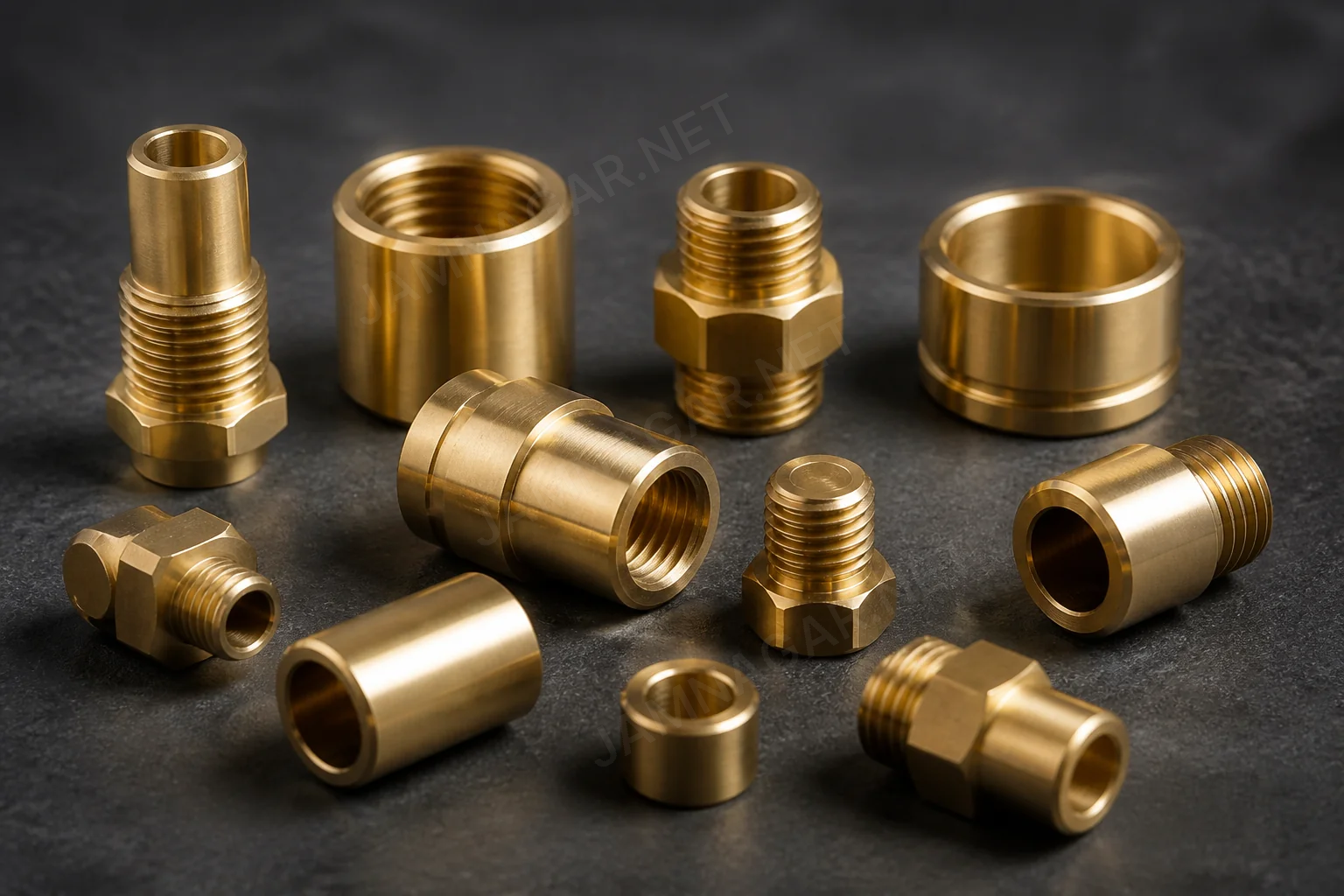
When a turned brass part fails on the line, the usual cause is not “bad brass.” It is a missing tolerance, a wrong thread form, or an assumed finish that never appeared on the purchase order. This page is written for purchasing and engineering teams who need a CNC turned brass components manufacturer that quotes from drawings — not from guesswork.
On Jamnagar.net we handle catalogue-near geometries and fully custom profiles. Start in the turned / CNC category, or go straight to quotation if you already have a PDF or STEP file. The goal is a rate and schedule you can put next to your BOM without a second round of clarification calls.
- Drawing-led quotations for diameters, threads, undercuts and knurls
- Free-cutting brass feedstock suited to high-volume turning when grade is confirmed
- Secondary operations — drilling, milling flats, broaching, slotting where listed or agreed
- Batch packing language for domestic despatch or export cartons
Where CNC turning fits in a brass supply chain
Most CNC brass work begins as extruded rod. The machine removes metal to hit OD/ID, faces, grooves and threads. Forging may still be the right route for heavy near-net blanks; turning wins when concentricity, fine threads and repeatable diameters matter more than near-net shape.
Buyers usually send CNC enquiries for adapters, sleeves, spacers, valve stems, insert blanks, sensor housings, electrical pins and custom connectors. If the part is already close to a catalogue line, we still ask for critical dimensions so the quote matches your mating assembly — not a lookalike photo from another market.
Jamnagar’s density of brass workshops is useful only when the enquiry is specific. A clear print lets us route the job to the right machine class: simple CNC for moderate volumes, multi-spindle thinking for stable high runners, or a hybrid route when a forged blank still needs precision finishing.
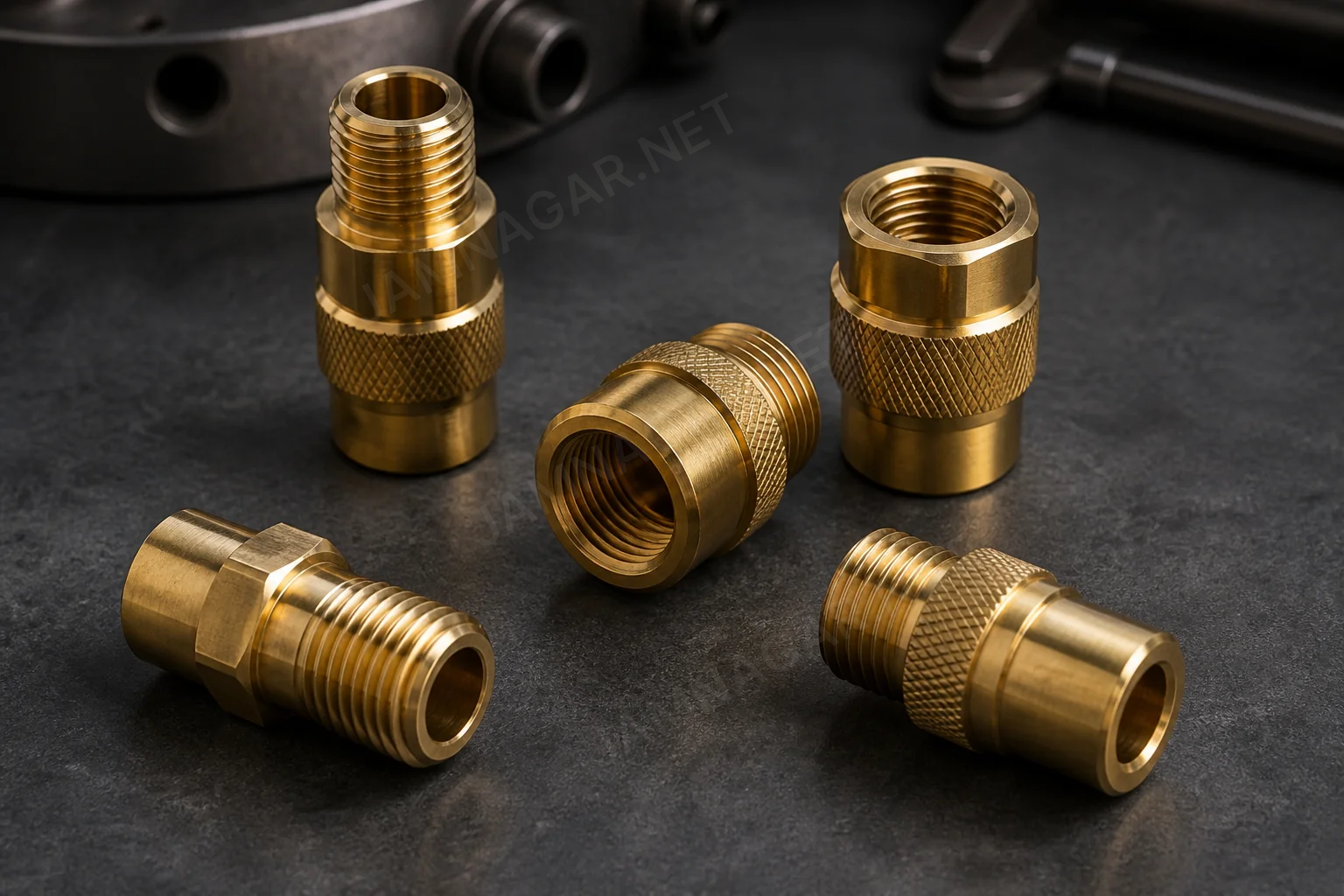
Typical process sequence on a turned brass job
- Confirm alloy, blank diameter and approximate weight per piece.
- Program / set up for primary turning (faces, ODs, grooves, undercuts).
- Cut threads to the named standard (metric, BSP, NPT, UNC/UNF, etc.).
- Run secondary ops only if the drawing calls for them.
- Deburr, wash, apply finish if specified, then pack to the agreed method.
You do not need to micromanage tool brands or spindle speeds. You do need to say which faces seal, which diameters press, and which threads must gauge to a named class. That is the difference between a usable first article and a pretty scrap bin.
Shop-floor note: A drawing that marks every dimension as “critical” forces slower inspection and higher cost. Mark the functional fits and sealing diameters tightly; leave non-mating faces with workable general tolerances unless your assembly truly needs more.
Materials we expect you to name
Commercial turning in this cluster commonly uses machining brass families such as CW614N / IS-319 style grades. That is a practical default for many fasteners, adapters and fittings — not a silent assumption for every water or gas duty.
If you need a different chemistry for corrosion, conductivity or regulatory reasons, put the grade on the quotation request in the same words as the drawing. Mixed messages between email and PDF are the fastest way to stall a rate. Plating and passivation belong in the same breath as alloy: natural brass, nickel, tin or another finish only when you ask.
- Free-cutting / machining brass for high-volume turned parts
- Application-specific alloys only when you specify them
- Finish callouts treated as commercial fields, not decoration
Part types we quote most often
| Part type | What buyers usually control | Common risk if omitted |
|---|---|---|
| Threaded adapters / nipples | Thread standard, pitch, engagement length | Cross-thread or leak path |
| Sleeves & bushings | ID/OD fit, concentricity, length | Press-fit failure |
| Knurled / insert blanks | Knurl type, OD after knurl, undercut | Pull-out in plastic |
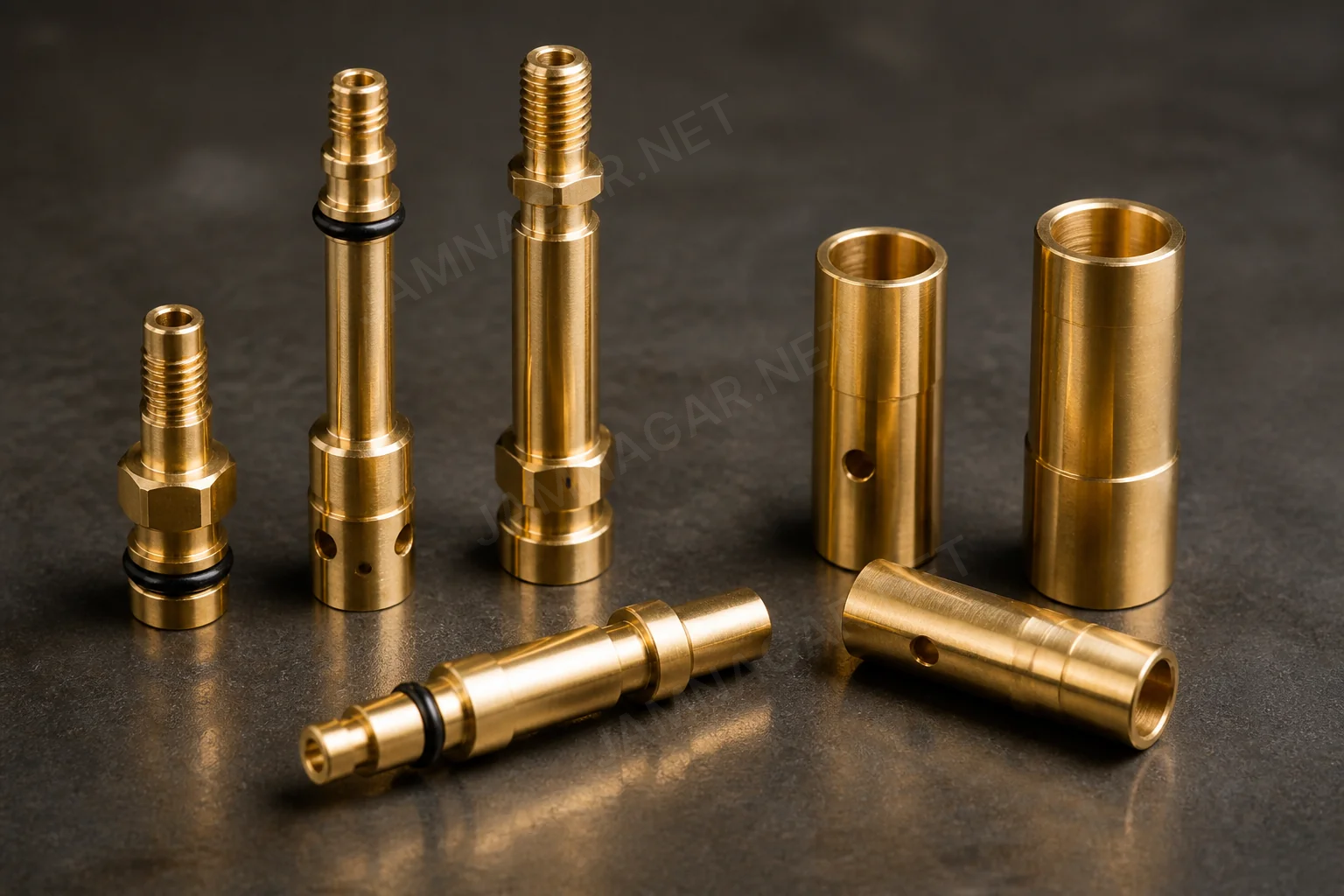
| Valve / control stems | Seal diameters, groove widths | Leak or sticky actuation |
| Electrical / connector pins | Plating, tip geometry, hardness notes | Contact or plating reject |
Browse live SKUs in turned CNC brass components, then attach drawings for anything that is not a straight catalogue match. Catalogue photos help orientation; they do not replace a tolerance block.
Spec checklist for CNC quotations
| Field | Why production needs it |
|---|---|
| 2D PDF + critical dims (STEP optional) | Locks geometry and toolpath assumptions |
| Alloy / grade | Chip behaviour, cost, corrosion |
| Thread standard & class | Wrong form = scrap assembly |
| Tolerances on fits only | Sets machine time and gauge plan |
| Surface finish / plating | Adds process steps and lead time |
| Quantity + target schedule | Batch size, setup amortisation |
| Packing / labelling notes | Export vs domestic carton choice |
Tolerances and inspection — keep them commercial
CNC can hold tight diameters, but every micron you add below a functional need raises cost. Tell us which diameters mate with seals, bearings or press fits. General faces and non-critical lengths can sit on a looser envelope unless your drawing standard says otherwise.
If you use first-article approval, say so early. We plan sampling around the dimensions you mark, not around decorative chamfers. When a gauge or thread plug standard matters to your incoming QC, name it on the quotation request so the inspection plan matches your dock, not a generic habit.
Secondary operations that change the quote
A “simple turned part” stops being simple when the print adds cross-holes, milled flats, broached hexes, deep knurls or plating trials. Each of those steps adds handling and sometimes a second setup. List them as line items in your mind even if they appear as notes on the drawing — that is how the rate is built.
If a secondary op is optional for a pilot lot, say which lot includes it. Pilot without plating and production with plating are two different commercial objects.
Applications that drive CNC brass demand
Enquiries typically come from sanitary and fluid assemblies, hose and pneumatic connectors, gas-related fittings, automotive small parts, electrical hardware, lighting fixtures and general OEM machine builders. The industry label matters less than the mating geometry and the annual volume band you expect after approval.
Lead time without theatre
Repeats of a known setup move faster than first articles with special knurls, odd threads or plating trials. We confirm timing after the drawing review — not from a generic speed claim. Export packing, third-party inspection windows and staggered deliveries should be written into the enquiry if they affect the calendar.
For a wider view of product families beyond CNC, open the full brass catalogue.
FAQ
Do I need a 3D file, or is a PDF enough?
A clear 2D drawing with tolerances is enough for most quotes. STEP helps on complex profiles; it does not replace thread and grade callouts.
Can you match a physical sample?
Yes. Send photos plus measured critical dimensions and thread notes. CAD is still better when fits are tight.
Is there a fixed MOQ for CNC parts?
Enquire for the quantity you need. Rate and schedule follow setup time, blank size and finish requirements.
Do you plate parts as a default?
Finish is quoted only when specified. Natural brass is common; nickel, tin or other finishes are added when the quotation request asks.
What if my part is partly forged and partly turned?
Say so. Some geometries start as forged blanks and finish on CNC. We route from the drawing, not from a single process slogan.
Where do I send the files?
Use the quotation form and attach drawings. Mention destination city or port if packing format matters.
Related reading
Related reading on Jamnagar.net: quote drawing checklist · forge vs CNC process routes.
Next step
Shortlist similar geometries in the CNC category, or skip browsing and send the drawing if the part is custom. One complete quotation beats three partial emails.


