Jamnagar Brass Parts: From Industry History to Better Quotes
A practical buyer-focused guide connecting Jamnagar’s brass manufacturing background with how to specify grades, sizes and quotation details for industrial components.

Jamnagar’s industrial reputation exists because buyers across India and export markets repeatedly source brass components from the city’s dense MSME network. This article connects that background to a practical question: how should a purchasing team write a better quotation request?

A short industry timeline buyers should know
| Period | What changed | Buyer relevance |
|---|---|---|
| 1540 | Nawanagar / Jamnagar founded as a princely capital | Long urban and trade continuity in Saurashtra |
| Mid-1940s | Brass-part manufacturing expands as older button/related work declines | Start of modern component cluster identity |
| Post-independence decades | Workshops scale into broader electrical, sanitary, auto and engineering parts | Wider catalogue depth for B2B sourcing |
| GIDC / estate era | Industrial estates concentrate capacity | Easier clustering of process specialists |
| Today | Jamnagar remains a major Indian brass-parts hub | quotation-based buying still depends on exact specs |
Common brass-part families from the Jamnagar ecosystem
On Jamnagar.net, buyers can browse categories that reflect real industrial demand, including:
- Cable glands and electrical entry accessories
- Electrical parts such as terminals, pins and contacts
- Sanitary fittings, valves and fluid-control related components
- Inserts, fasteners and anchors
- Hose / pneumatic and gas-related fittings
- Automotive, turned/CNC, forged, stamped and specialty parts
These families match the long-standing character of Jamnagar manufacturing described in civic notes: many small-to-medium engineered brass components rather than one single product line.
Material grades you will often see in catalogues
Industrial catalogues commonly reference grades such as CW614N and IS-319 for free-cutting / machining brass families, along with application-specific options (for example higher-conductivity or dezincification-resistant choices where required). Always confirm the grade against your drawing, standard and end-use — catalogue guidance is a starting point, not a substitute for engineering approval.
Why quotation works better than blind online pricing
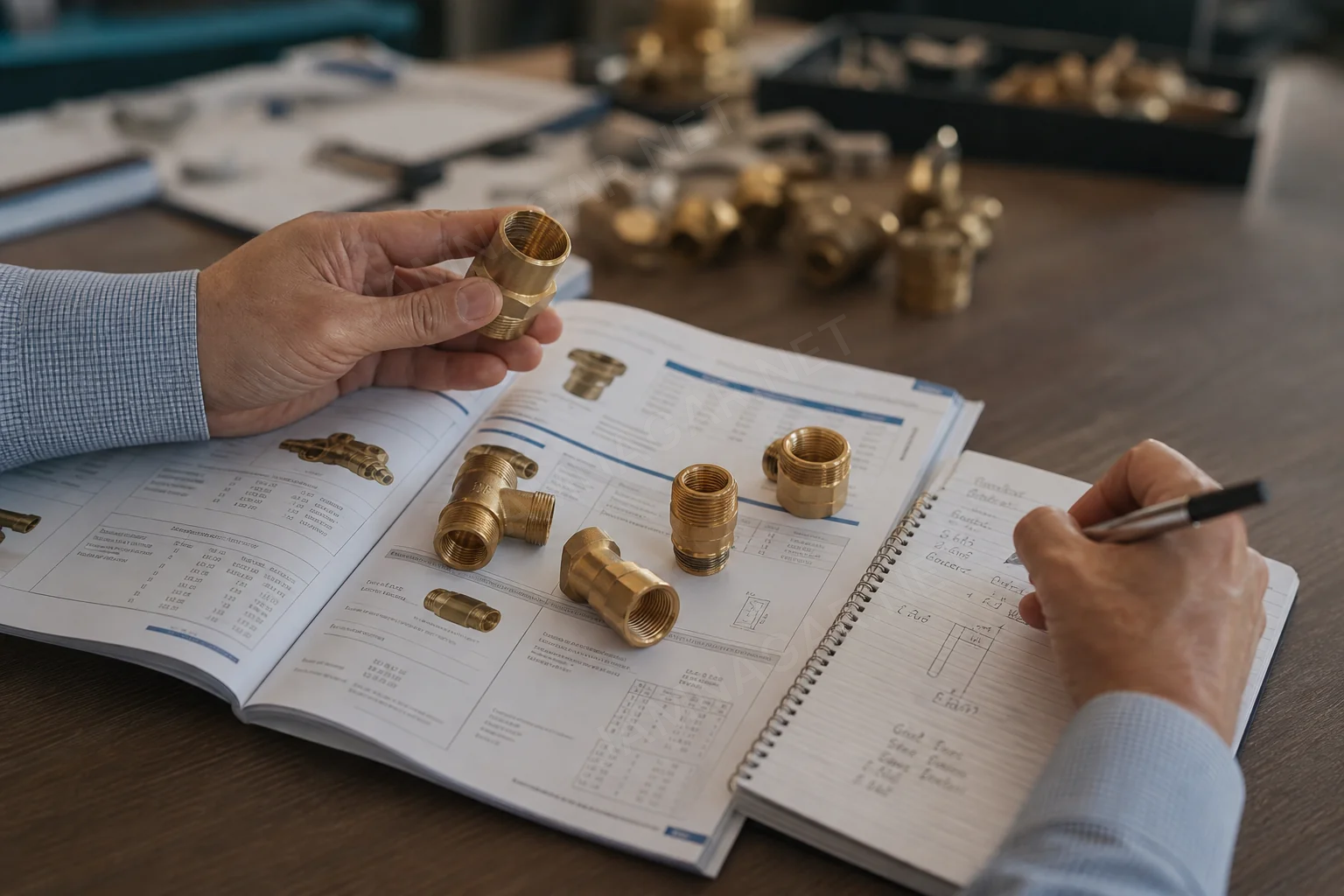
A usable quotation request usually carries: part identity (SKU or drawing revision), thread standard, alloy grade, finish, quantity and packing notes. Photos help; they do not replace those fields. Use the quote drawing checklist and get a quotation when files are ready.
Brass component pricing usually depends on exact dimensions, machining time, finish, scrap/grade mix and quantity. That is why Jamnagar.net is built as a direct quotation portal rather than a fixed-price shopping cart. There is no fixed minimum order quantity required to submit an enquiry; commercial terms follow the specification you share.
How Jamnagar.net uses this history
We publish this background so buyers understand the place behind the parts. The catalogue itself is product-led: search, category filters, specifications and a verified enquiry path. Historical context supports trust; drawings and quotation details decide supply.
Related reading
Related reading on Jamnagar.net: accurate quote drawing checklist · Brass City industry context.


