Brass Alloy Grades for Components: What Buyers Should Specify
A commercial guide to naming brass grades on quotations — CW614N, IS-319 and related machining brass — so quotes match the part you actually need.
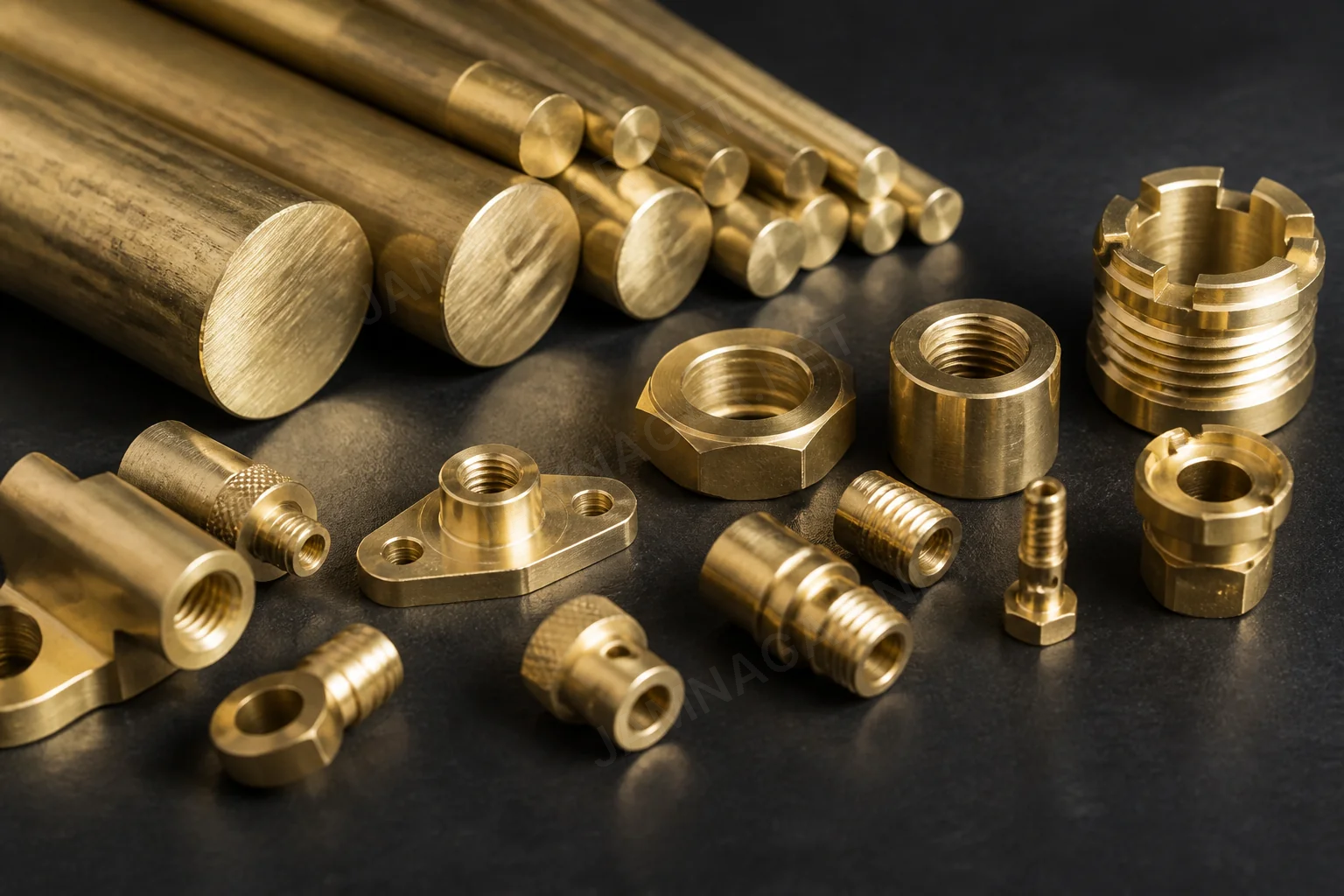
Alloy grade is one of the first fields that decides a usable brass parts quote. Buyers often send a photo and a size — then wonder why two suppliers reply with different rates. The gap is usually material language, not machining skill. This article is a commercial guide to brass alloy selection for components: how to name grades the way workshops and traders already talk, so your quotation request locks the right feedstock.
Jamnagar.net quotes from drawings, samples and catalogue lines. We do not turn every enquiry into a metallurgy seminar. We do need a clear grade line when the part is custom or when the duty is not a standard free-cutting fitting.
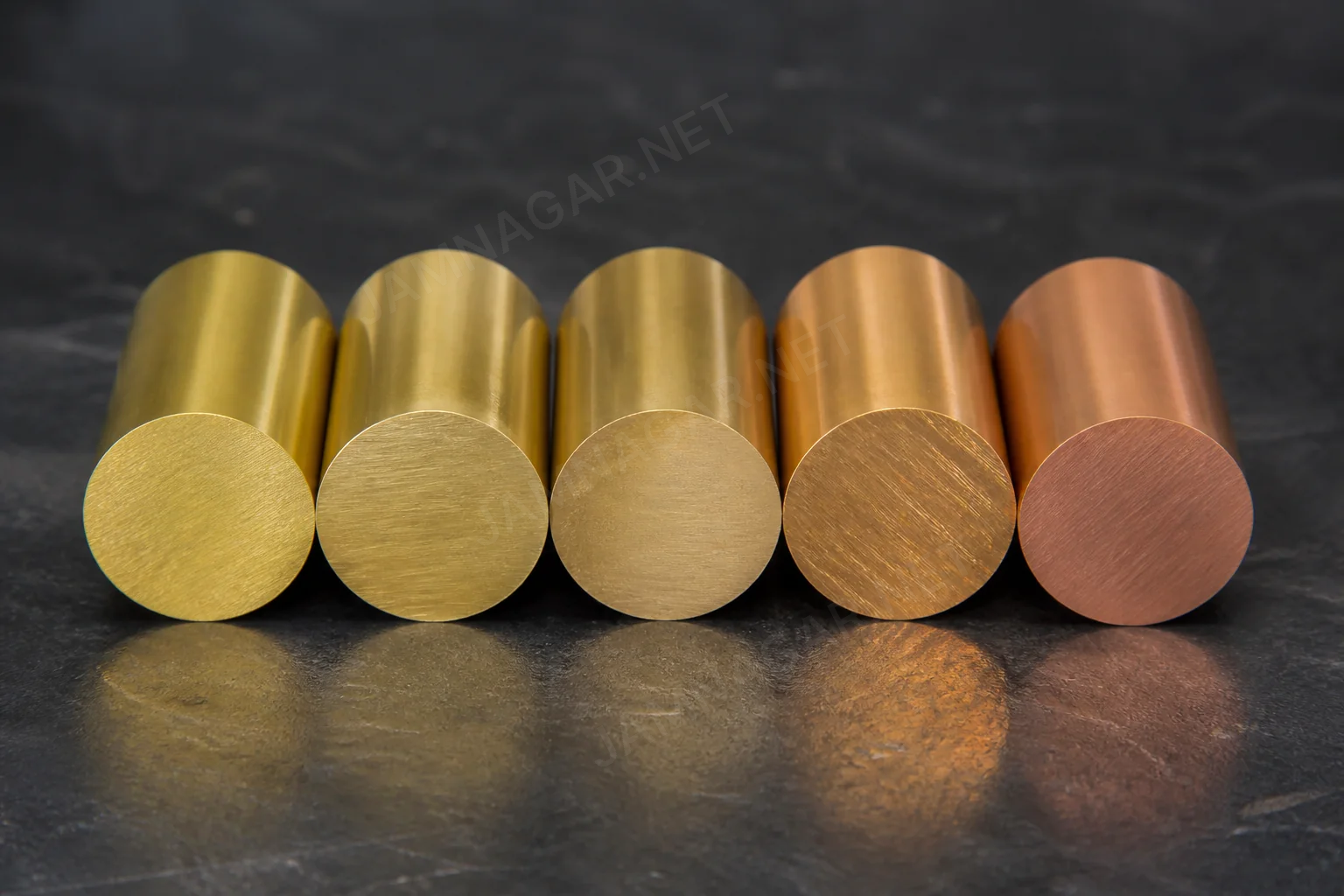
Why grade belongs on the quotation request, not in a later email
Free-cutting machining brass is the default language for many turned fittings, fasteners and inserts. That default is useful — until the drawing calls for something else. If grade is missing, the quote may assume a common machining alloy. If your assembly needs a different chemistry for water duty, gas sealing or plating behaviour, the first article can fail even when dimensions look correct.
Treat grade like thread standard: one line, consistent across PDF, email and packing note.
Commercial rule: One part number, one grade line. If the drawing says CW614N and the email says “yellow brass,” production cannot lock a firm rate without clarification.
Trade names buyers see most often
On day-to-day quotations for turned and machined brass components, these names appear constantly. Use them as trade language — enough for quoting — not as a full materials science brief.
| Grade / call-out | How buyers usually use it | Typical component types |
|---|---|---|
| CW614N | Common EU-style free-cutting / machining brass call-out | Turned fittings, adapters, fasteners, inserts |
| IS-319 | Indian commercial machining brass family language | Fittings, hardware, general turned parts |
| Free-cutting brass / machining brass | Broad commercial shorthand when a drawing is still open | Catalogue-style fittings and fasteners |
| Rod / bar grade as supplied | When feedstock is named and finish ops follow | CNC blanks, studs, bushings |
Exact chemistry ranges and national equivalents can vary by mill certificate and order. For purchasing, the job is simpler: name the grade your customer or drawing already accepts, or ask us to propose a machining grade for a non-critical geometry.
When “standard machining brass” is enough
Many catalogue-style parts — nipples, adapters, knurled inserts, machine screws, simple CNC adapters — run on free-cutting brass because the priority is clean threads, stable chip behaviour and consistent dimensions. If your quotation request is for that class of part and you have no special corrosion or potable-water note, stating CW614N or IS-319 (or “free-cutting brass per drawing”) is usually enough to start quoting.
Browse current families on the brass product catalogue, then confirm grade on the quotation request when the SKU is custom or when the drawing already names an alloy.
When you should not leave grade blank
Leave a blank grade only when you truly accept a proposed machining brass for a non-critical sample. Do not leave it blank when any of these apply:
- The customer drawing already names an alloy or standard
- The part sees continuous water contact and a DZR / special duty note exists
- Plating, tinning or nickel finish is critical to colour and adhesion
- You are matching a legacy sample that failed in one grade before
- Export paperwork or incoming inspection will check mill certificates
In those cases, write the grade in the quotation request subject or material field in the same words as the drawing. If you only have a sample, say so: “match sample colour/hardness; propose machining brass” is clearer than silence.
Alloy selection checklist for component buyers
| Check | What to write |
|---|---|
| Drawing alloy | Copy the exact string from the PDF title block |
| If no drawing alloy | “Propose free-cutting / CW614N or IS-319 for machining” |
| Duty note | Water / gas / electrical / general engineering |
| Finish | Natural, nickel, tin, or other — finish can interact with grade choice |
| Certificate need | Yes / no — ask only if incoming QA requires it |
| Substitute allowed? | “No substitute” or “equivalent machining brass OK” |
How we use grade when quoting on Jamnagar.net
When you send a quotation request, grade sits beside size, thread and quantity. It affects rod selection, machine time assumptions and sometimes finish steps. We will ask a clarifying question if the drawing and email disagree. We will not invent a certification claim or rename your alloy to make the quote look prettier.
For background on how the Jamnagar brass cluster works as an industry, you can read context on jamnagar.info. For pricing and supply, stay on Jamnagar.net and attach the drawing.
Practical examples (buyer language)
- Compression adapter, BSP threads, natural finish: “IS-319 / free-cutting brass, natural.”
- Knurled moulding insert, nickel: “CW614N or equivalent machining brass, nickel plated.”
- Custom CNC sleeve from customer DWG: copy the material block exactly; do not paraphrase.
- Sample match, no CAD: “Match sample; propose machining brass; confirm before bulk.”
FAQ
Is CW614N the same as every “yellow brass” on the market?
No. Treat CW614N as a specific call-out. “Yellow brass” is too loose for a firm production order.
Can I write only IS-319 on every quotation?
Only if that matches your drawing or accepted commercial practice for that part. If the customer named another grade, keep their wording.
Do you decide the alloy for me?
For open, non-critical geometries we can propose a machining brass. For locked customer drawings, we follow the drawing.
Should I send a mill certificate request on every small batch?
Ask for certificates when your QA system needs them. Not every low-volume trial requires the same paperwork as a regulated shipment.
Does finish choice change which grade I should name?
Sometimes. If plating adhesion or colour match has failed before, mention both finish and grade together on the quotation request.
Where do I put the grade on Jamnagar.net?
In the quotation request notes or material field, next to size and thread. Attach the drawing so the title block is visible.
Related reading
Related reading on Jamnagar.net: rods and bars supply notes · quality fields for buyers.
Next step
If the grade is already on the drawing, send the file. If it is not, name a machining brass call-out or ask us to propose one. Clear material language shortens the quote cycle more than a longer email.


