Brass Sheet, Plate and Stamped Parts: How Buyers Should Spec Them
Practical guide to sourcing brass sheet, plate and stamped components — when blanking beats turning, what to put on the drawing, and how to request a usable quote.
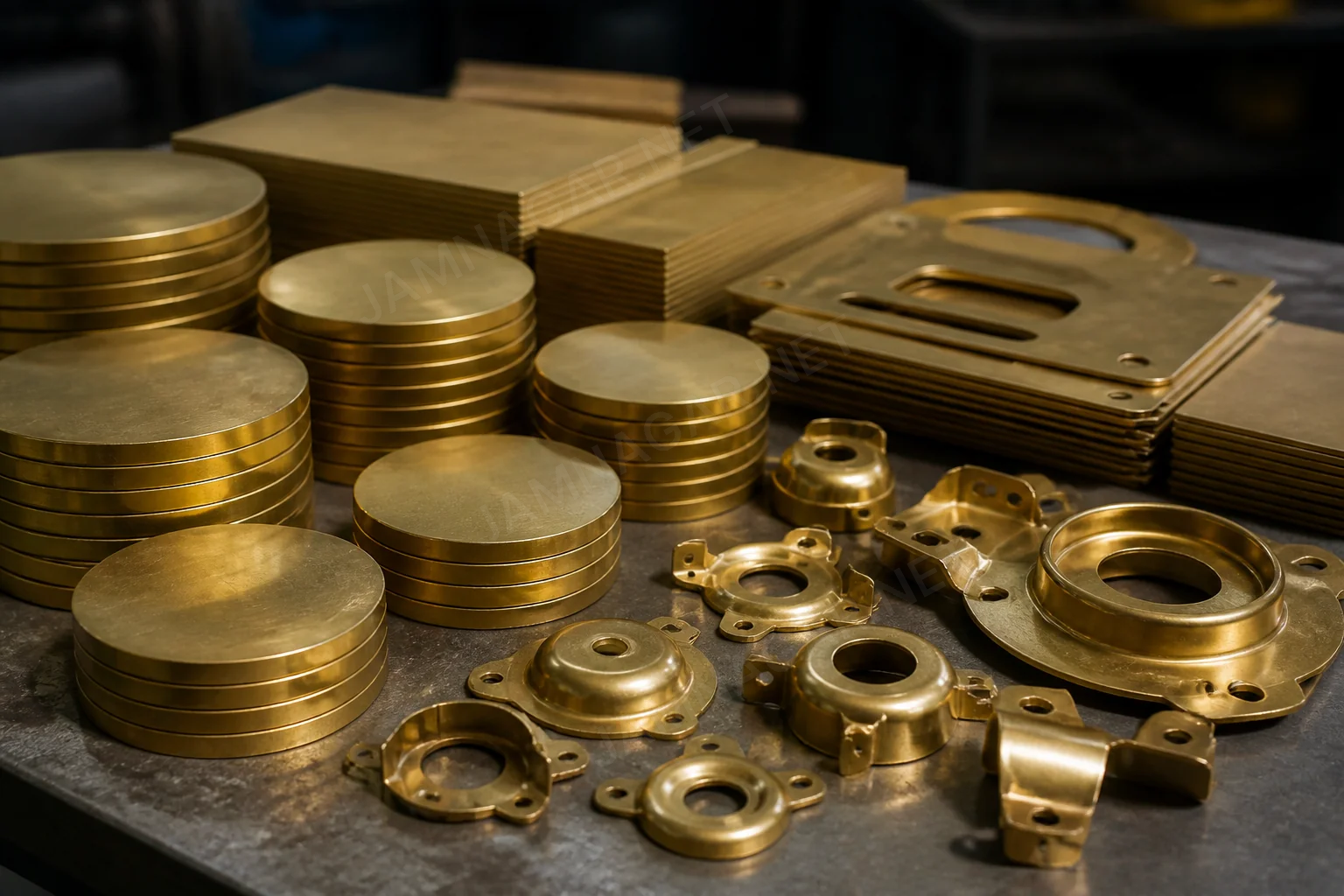
Not every brass requirement belongs on a lathe. Flat blanks, pierced plates, formed clips and stamped brackets often start as brass sheet or strip, then move through blanking, piercing and light forming. If your part is thin, wide or needs a developed blank, you are usually looking for a brass sheet and stamped parts manufacturer route — not a turned-rod quote.
Jamnagar.net quotes sheet, plate and stamped brass components from drawings or samples. Browse the sheet & stamped category for catalogue geometry, or send the developed blank when your part is custom.
- Sheet / strip blanks cut to size for secondary work
- Pierced and blanked plates, washers, shims and tags
- Light formed clips, brackets and stamped profiles when tooling allows
- Mixed lots where stamped parts ship with turned fittings in one order conversation
When sheet or stamped brass is the right process
Buyers waste weeks when a stamped plate is quoted as if it were a solid turned disc. Use sheet/stamped logic when:
- Thickness is small relative to outline (typical sheet/strip gauges).
- The outline is irregular, slotted or multi-hole.
- You need a developed blank, bend line or light form.
- Volume justifies blanking / piercing tooling, or you accept laser/CNC blank routes for lower volume.
If the part is a solid bush, hex, or heavy forged blank, say so early — we will route it away from sheet work. For cluster context on Jamnagar’s brass trade, see jamnagar.info; for pricing and supply, stay on Jamnagar.net.
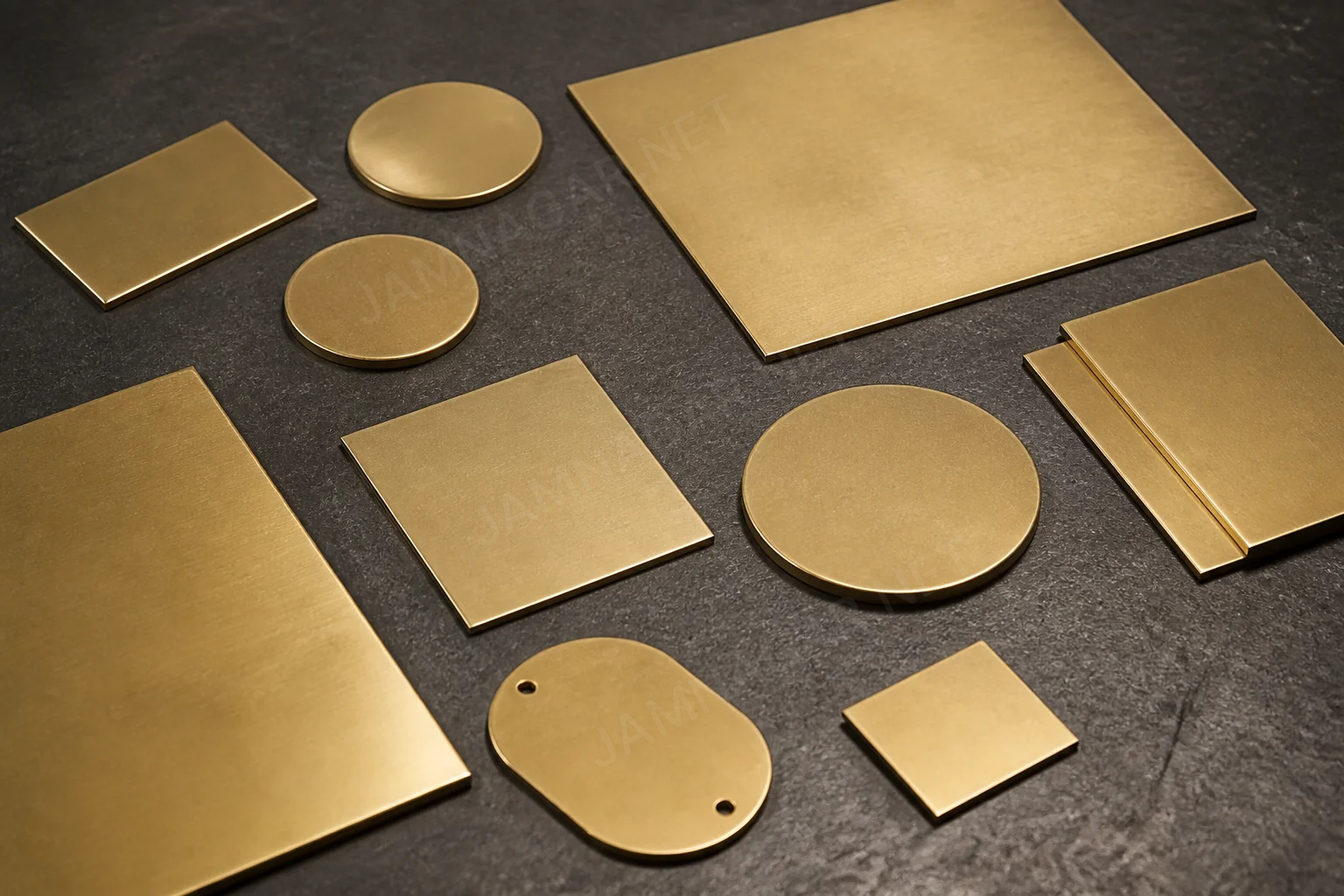
Part types we quote in this family
| Type | What buyers usually send | Common snags |
|---|---|---|
| Flat blanks / plates | Outline + thickness + corner radii | Missing flatness or burr callout |
| Pierced washers / tags | OD/ID, hole pattern, gauge | Hole position without datum |
| Shims / spacers | Thickness tolerance band | Grade assumed, not stated |
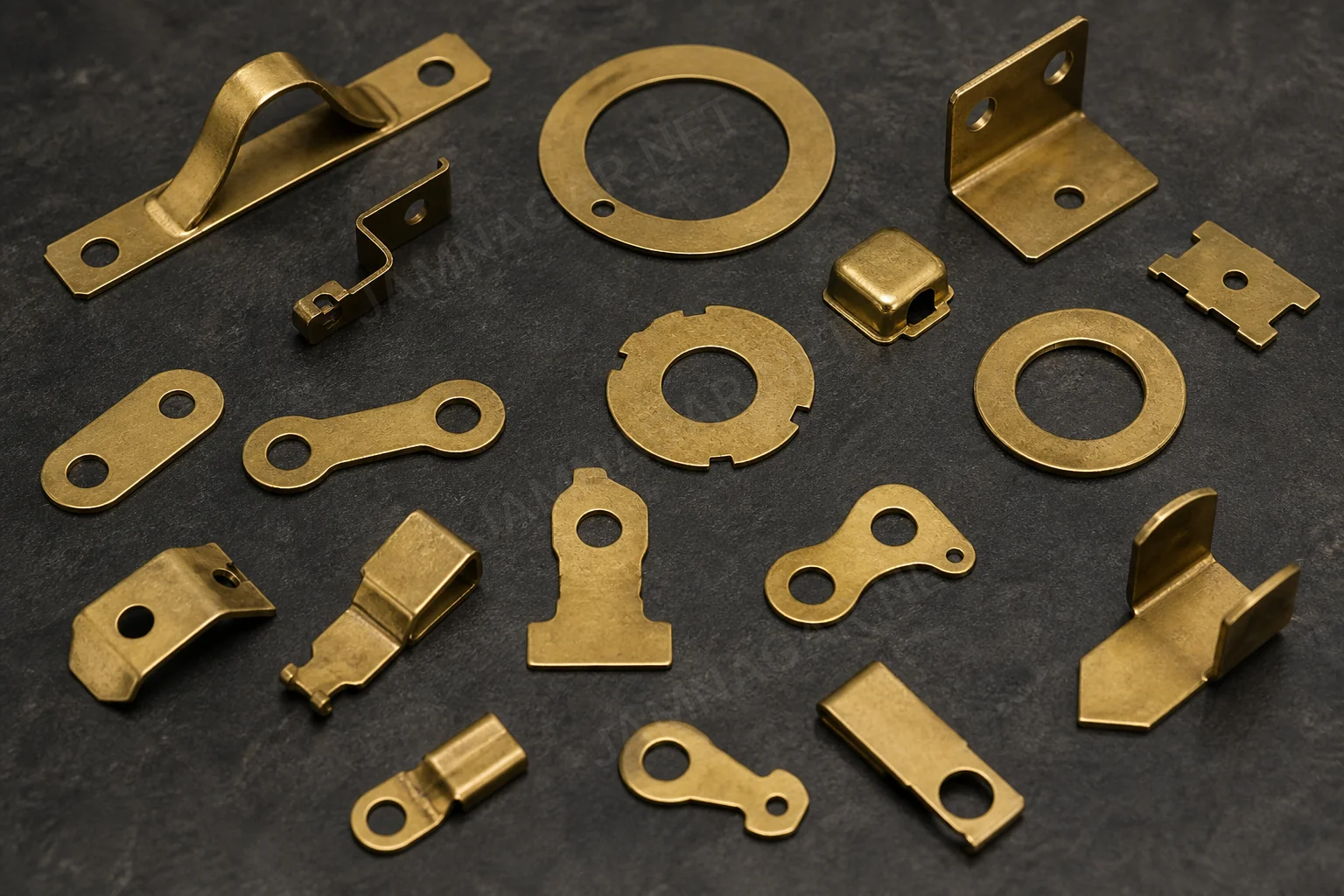
| Clips / light brackets | Flat pattern + bend angles | Springback ignored on soft brass |
| Custom stamped profiles | Drawing + annual volume | Tooling ownership not discussed |
Process stages (practical, not brochure language)
A typical stamped or sheet brass job moves through some combination of:
- Material selection — sheet/strip grade and temper suited to blanking or forming
- Blanking / cutting — to outline
- Piercing / drilling — holes, slots, windows
- Forming / bending — when the part is not flat
- Deburr / clean — edge condition for assembly safety
- Finish — natural brass, nickel or other plating only when specified
Shop-floor note: Temper matters. Soft sheet that blanks cleanly may crease on a tight bend; harder stock that holds a form may crack on a small radius. Put temper or hardness notes on the quotation request when the drawing is silent.
Spec checklist for sheet and stamped quotations
| Field | Why it matters |
|---|---|
| Thickness / gauge + tolerance | Locks material and process cost |
| Alloy / temper | Blank quality, formability, conductivity if relevant |
| Flat pattern or 3D with bend lines | Avoids wrong developed size |
| Hole sizes, positions, datums | Piercing / inspection plan |
| Edge / burr acceptance | Assembly and plating risk |
| Finish / plating | Adds process and lead time |
| Quantity + repeat schedule | Tooling vs soft tooling decision |
Tolerances buyers should not leave blank
Sheet parts fail in the field more often on hole position and flatness than on “brass colour.” Call out critical holes, mating faces and any no-burr zones. If a decorative surface faces the customer, say which side is show face. If the plate is only structural inside a housing, we can quote a more practical edge finish.
Tooling honesty
High-volume progressive tools are a commercial decision, not a default. First articles and moderate runs may use blanking methods suited to the volume you state. Tell us annual volume and whether this is a pilot or a running SKU — that changes the quote structure.
Packing and batch notes
Thin brass scratches and dents easily. Ask for interleave, bagging or carton layering when parts must arrive unmarked. Mixed cartons of sharp and soft parts need separators — mention that if stamped plates travel with heavier fittings.
How sheet jobs usually move from enquiry to first carton
A clean sheet/stamped enquiry follows a short commercial path. First we confirm the part is truly a sheet route and not a mis-filed turned blank. Next we check whether a catalogue geometry is close enough to short-cut development. Then we lock thickness, temper, outline and hole datums. Only after that does a rate mean anything.
If your volume is low, expect the quote to reflect soft tooling or cut-and-pierce methods. If your volume is high and stable, ask for a tooling discussion as a separate line — do not bury tool amortisation inside a vague piece price. Buyers who separate piece price, tooling and sample cost get cleaner approvals from their own finance teams.
Inspection language that belongs on the print
Decide which holes are position-critical and which are clearance. Decide whether flatness is measured free-state or clamped. Decide whether burrs are measured by touch, by height limit, or by a no-sharp-edge note. Those three decisions prevent most “looks fine / fails gauge” arguments after delivery.
For plated sheet parts, also state whether plating is before or after forming when bends are tight. Plating that cracks on a bend is a drawing problem as much as a process problem. Put the sequence on the quotation request when appearance or corrosion resistance is commercial.
Applications we see on sheet and stamped quotations
Typical enquiries include electrical contact plates and tags, sanitary bracket plates, equipment name plates, grounding straps cut from strip, light mounting brackets, washer families, and custom shims for assembly stack-up. The industry label matters less than thickness, temper and hole discipline. If your part sits in a corrosive or outdoor duty, say so — grade and finish may need to move with the environment.
When stamped parts ship with fasteners or inserts in the same programme, keep SKU codes separate even if cartons travel together. Mixed geometry is fine; mixed identity is not.
FAQ
Can you quote from a sample if I have no CAD?
Yes. Send clear photos, thickness measurement, outline dimensions and hole centres. A flat scan or sketch with datums is still better for multi-hole plates.
Do you only stamp, or also cut flat sheet blanks?
Both routes are discussion points. Many quotations are cut-to-size blanks or pierced plates without progressive tooling. Share volume so we choose a sensible method.
What thickness range is realistic?
Depends on geometry and process. Put the thickness on the drawing; we confirm feasibility against the outline and hole pattern rather than publishing a fake universal range.
Will you invent “ISO certified sheet plant” claims?
No. We quote capability against your drawing, grade and quantity. Certifications and test reports are only promised when you require them and we can supply the related evidence.
Where do I start in the catalogue?
Open sheet & stamped parts, shortlist close geometries, then use the quotation request with your thickness and hole pattern if the SKU is not exact.
Related reading
Related reading on Jamnagar.net: alloy grades for components · drawing checklist for quotes.
Next step
Attach the flat pattern or formed drawing, state thickness and temper, and tell us whether this is a one-off or a repeating line.


